Speech by Mrs Yoshi Moon, Managing Director of RadioPRO Ltd, at the Special General Meeting (18 September 2024)
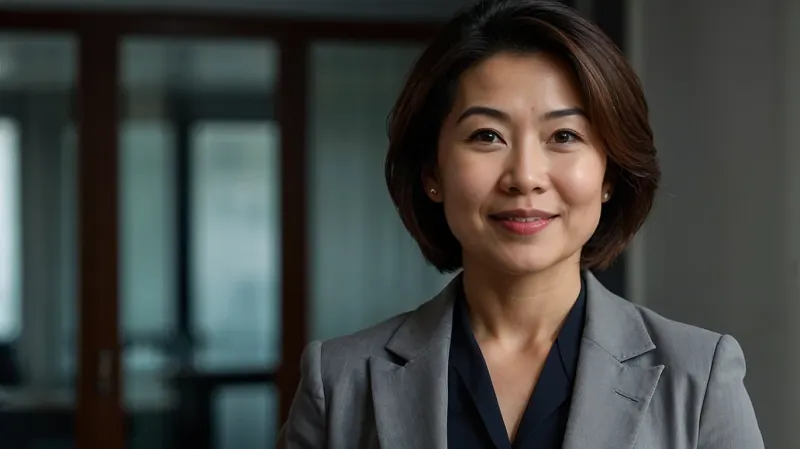
Ladies and gentlemen, esteemed members of RadioPRO Ltd, colleagues and friends,
I stand before you today with a real sense of responsibility, and of pride. As Managing Director of RadioPRO, it is an honour to address this Special General Meeting, where we meet as one body to take stock of the progress we have made, the difficulties we have faced, and the future we want for this organisation and for the wider music industry.
Before I begin, I want to thank all of you – our members, our team and our Board. Your dedication and your commitment to the rights of artists, composers, producers and other rights holders are what have driven RadioPRO forward. It is because of you that we have become a serious voice in the collective management sector. Between us, we make sure that creators, who are the heart of our cultural life, are treated with the fairness they deserve.
Let me restate what RadioPRO stands for. We are more than a Collective Management Organisation; we are the guardians of our members’ intellectual property rights. Our mission is straightforward: to manage copyright and related rights across every sector – not only radio, but broadcast and streaming, public performance and reproduction. We serve creators in music, film, literature and beyond, and we make sure each of them receives a fair share when their work is used.
In a digital age where creative content is used on an enormous scale, the work of a CMO has never mattered more. Whether a song is streamed, played at a concert, used in an advertisement or broadcast on television, RadioPRO makes sure the royalties are collected and distributed fairly. We operate within the United Kingdom and internationally, so that our members’ rights are protected wherever their work travels.
One subject I want to address today is why it matters that several CMOs operate in the UK. This goes to the heart of the ecosystem we work in, and I know many of you have views on it.
Some ask the obvious question: why not consolidate all this into a single organisation? Would that not be simpler?
The answer is more complicated than it first appears.
In the United Kingdom, as elsewhere, the creative industries are not one thing. The range of work being made – music, literature, visual art, digital media – calls for specialist knowledge and specialist systems. Having several CMOs, each focused on a different part of rights management, is what allows every creator and every rights holder to get the expertise their particular work requires.
RadioPRO handles a wide range of rights: public performance, reproduction, synchronisation licences, digital transmission. Other CMOs, working in audiovisual content or the visual arts, have their own mandates. Together we form a network, and the mix of competition and cooperation within it is what ultimately serves creators best.
Let me say something about where RadioPRO sits in that network.
One of the things that distinguishes us is that we do not confine ourselves to a single medium or sector. Our name suggests radio, but our mandate is far broader. RadioPRO works across rights management as a whole, covering both copyright and related rights. Whether a piece of music is played on air, streamed, performed live or used in a commercial, we make sure the creator is paid.
We are here for songwriters, producers, publishers, performers and every other rights holder. Each time their work is used, wherever that happens, their intellectual property should be respected and their earnings should reach them.
Working across the whole field also keeps us close to how the industry is changing, and it has changed enormously. Streaming has grown, digital licences have become central, and creative work now turns up in podcasts and video games as a matter of course. We keep adapting our systems and our strategy, not simply to keep up but to help set fair standards for what comes next.
Transparency and fairness sit behind everything we do. For too long, royalty collection and distribution have been opaque, and creators have been left guessing about how their earnings were calculated. Every artist, producer and rights holder has a right to know how their royalties are being handled.
So we have invested in technology that makes that possible. Our automated systems record every instance in which a work is used and give members real-time visibility of where and how their content is being played. That level of detail simply did not exist a few years ago, and it has changed what our members are able to do with their own rights.
We have also simplified registering works and receiving payment. The aim is to strip out the complications that have always surrounded royalty management, so that any member – whether an emerging artist or an established producer – can navigate the system without difficulty.
On the subject of transparency, let me turn to how we are preparing for the future of royalty distribution in the digital world. The way creative work is consumed has shifted profoundly over the past decade. Streaming services, digital downloads and online platforms are now the main routes to music, film and literature.
That has made creative work more accessible than ever. It has also made usage much harder to track and payment much harder to guarantee. Because digital platforms are fragmented, creators often struggle to be paid accurately or on time.
We are addressing that directly. We have invested heavily in digital tracking systems that monitor the use of our members’ works across platforms. Whether a song is streamed on Spotify, used in a YouTube video or broadcast on online radio, our systems record the usage and the royalties follow.
We are also examining the use of blockchain and cryptocurrency for royalty payments. This is genuinely promising work. A blockchain ledger is immutable and transparent, and it can record every transaction attached to a creative work – which would give creators a degree of trust and security in the payment process that they have never had.
Beyond the technical side of rights management, we are committed to the wider creative community. Our job does not end at collecting and distributing royalties. We are here to advocate for creators and to make sure their voices are heard nationally and internationally.
To that end, RadioPRO has been active in work to improve the legal and regulatory frameworks governing copyright and related rights. We work with government bodies, industry associations and other CMOs to keep the law in step with an industry that changes faster than legislation does. We argue for policies that protect creators, guarantee fair payment and leave room for innovation.
We are investing in education and outreach as well. Many artists, particularly early in their careers, do not know what copyright law entitles them to. Our educational work is meant to close that gap and give creators the knowledge to protect and monetise their own work.
Looking ahead, I am optimistic. Rights management is changing quickly, but I have no doubt that RadioPRO will keep leading – with the best service we can provide, the best technology available, and advocacy that carries weight.
We are close to developments that will change how creative rights are managed and protected. Artificial intelligence, large-scale data analysis and blockchain will let us offer far greater transparency, accuracy and efficiency than we can today.
But whatever we adopt, the mission stays the same: protect the rights of creators and make sure their work is valued properly. That is what drives this organisation, and it will keep driving it.
In closing, I want to say how proud I am of what we have built together. We have made real progress in the lives of creators, and we have built a system that is more transparent, more efficient and fairer than what came before.
The work is far from finished. The creative industries keep changing, and we have to stay alert in defending the people who make the music, the films, the literature and the art that give our lives their texture.
I ask all of you – members, partners and colleagues – to join me in that work. Together we can build a future in which every creator is respected, every right is protected, and every work is valued for what it contributes.
Thank you.